
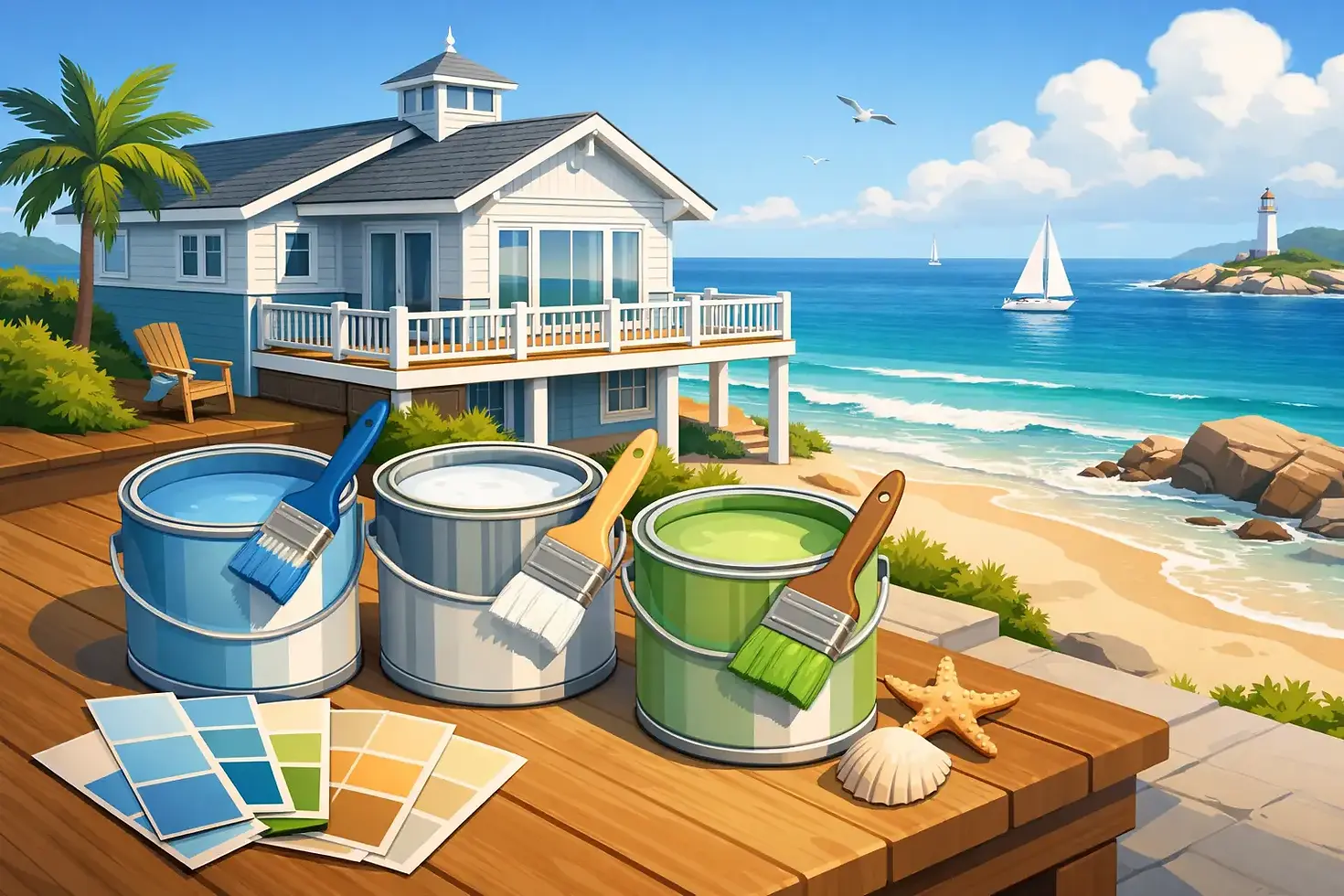
Best Exterior Paints for Coastal Homes

A house near the coast has a tougher job than most. On the Tweed Coast, exterior surfaces deal with salt in the air, hard UV, heavy rain, humidity and the general wear that comes with beachside conditions. Choosing the best exterior paints for coastal homes is not just about colour or curb appeal. It is about protecting the building fabric, reducing maintenance and getting a finish that still looks sharp years down the track.
That is why paint selection needs to be approached properly. The right system can help resist fading, peeling, blistering and early breakdown. The wrong one can look tired far sooner than expected, even if the colour looked good on day one.
What makes coastal homes harder to paint?
Coastal properties face a combination of stresses that inland homes simply do not. Salt-laden air settles on walls, trims and metal surfaces. UV exposure is often stronger and more constant. Moisture levels stay higher for longer, especially in shaded areas, and that creates a better environment for mould, mildew and coating failure.
These conditions affect different substrates in different ways. Timber can swell and contract more noticeably. Render and masonry can hold moisture and develop hairline cracks. Metal can corrode if coatings are not up to the job. Even previously painted surfaces can fail early when the original preparation or product choice was not suited to the environment.
In practical terms, the best coastal paint is rarely just one product picked off a shelf. It is usually part of a complete system that includes surface preparation, repairs, primer selection and the right topcoat for the substrate.
Best exterior paints for coastal homes: what to look for
For most coastal homes, high-quality exterior acrylic paints are the first place to look. A premium acrylic is flexible, durable and generally well suited to Australian conditions. It holds colour well, handles expansion and contraction better than many older-style coatings, and offers solid resistance to cracking and peeling.
Not all acrylics perform equally, though. For coastal work, it pays to choose products designed for harsh exterior exposure rather than basic trade or budget lines. Better formulations usually offer stronger UV resistance, improved washability, and more reliable adhesion over time.
Low sheen and satin finishes are often the most practical choice for broad wall areas. They present well, are easier to clean than flatter finishes, and tend to show surface imperfections less than full gloss. For trims, doors and detailed features, a premium water-based enamel or exterior trim paint can provide a harder wearing finish with a sharper look.
Where mould and mildew are an issue, especially on shaded elevations, paints with mould-resistant properties can make a real difference. They are not a substitute for proper cleaning and preparation, but they can help slow regrowth when combined with the right maintenance.
Matching the paint to the surface
The best exterior paints for coastal homes depend heavily on what the home is made from. One paint type does not suit every surface.
Weatherboard and timber exteriors
Timber homes and weatherboards need coatings that move with the substrate. Premium acrylic exterior paints are typically a strong option because they retain flexibility and stand up well to weather exposure. If timber is bare or weathered, the primer matters just as much as the topcoat. Any loose paint, grey timber fibres or minor surface damage need to be dealt with properly before repainting begins.
For hardwood trims or areas with tannin bleed, a specialised primer may be required. This is one of those points where cutting corners early often leads to stains, peeling or patchy finish later.
Render, masonry and fibre cement
Rendered walls and masonry surfaces benefit from breathable exterior coatings that resist moisture entry while allowing trapped moisture vapour to escape. If the surface has hairline cracking, an elastomeric or membrane-style coating may be worth considering. These products can bridge fine cracks better than standard paints, but they are not always necessary on every home.
Fibre cement generally performs well with premium exterior acrylic systems, provided the boards are sound, clean and correctly primed where needed. Joints, edges and previous patch repairs should always be checked closely.
Metal surfaces
Metal gutters, downpipes, balustrades and exterior steelwork in coastal areas are especially vulnerable. Salt accelerates corrosion, so preparation is critical. Any rust needs to be treated properly, and suitable anti-corrosive primers should be used before topcoating.
For these areas, the best result often comes from a system specifically designed for metal rather than trying to use a general wall paint across everything. The finish needs to do more than look good. It needs to hold out moisture and salt attack.
Why premium products usually pay off
There is always a price difference between standard and premium paint, and on paper it can be tempting to save on materials. On a coastal property, that saving often disappears quickly.
Higher-grade exterior paints usually provide better coverage, stronger adhesion and longer-term resistance to fading and breakdown. That can mean fewer repaints over the life of the property and less risk of premature maintenance. For homeowners, landlords and commercial property managers, that matters. Repainting a coastal exterior is not just a material cost. It involves labour, access, disruption and time.
This is where experience matters. A professional painter is not only choosing a brand or finish. They are assessing sun exposure, substrate condition, previous coatings, moisture issues and the amount of salt the property is likely to cop. That judgement has a direct impact on how long the finish lasts.
Preparation matters as much as the paint
Even the best exterior paint will fail early if the surface underneath is not prepared correctly. This is one of the biggest misconceptions in exterior painting. People often focus on the product label and overlook the condition of the substrate.
Coastal homes often need more extensive prep than expected. That can include pressure cleaning to remove salt and chalky residue, treatment for mould and mildew, sanding failed coatings, sealing porous surfaces, filling cracks and repairing damaged timber or render. If preparation is rushed, paint may not bond properly, and the finish can start lifting or blistering well before it should.
The same goes for repainting over old coatings. If the existing paint is unstable, simply applying fresh paint over the top will not solve the problem. It only hides it temporarily.
Colour choice also affects performance
While product quality is central, colour still plays a role in how an exterior performs. Dark colours absorb more heat, which can place extra stress on some substrates, especially timber and lightweight cladding. In high-exposure coastal settings, that can contribute to movement, fading and added maintenance.
That does not mean dark colours should never be used. It just means they should be chosen with a clear understanding of the surface, orientation and product limitations. Lighter colours are often more forgiving in full sun and can help keep exteriors looking fresher for longer.
A good painting contractor will balance the visual outcome with practical performance, rather than recommending a colour scheme based on appearance alone.
When specialist advice is worth it
If a property is close to the beachfront, has visible paint failure, or includes multiple substrates like render, timber and metal, getting specialist advice is the smart move. Coastal repainting is not an area where guesswork saves money.
A professional assessment can identify whether the home needs simple repainting, a more involved restoration approach, or targeted repairs before coatings go on. That is especially important for older homes, investment properties and commercial buildings where ongoing presentation and durability matter.
For Tweed Coast properties, local knowledge counts. Conditions vary from one site to the next depending on exposure, elevation and distance from the water. A painter with genuine experience in coastal environments will know what tends to fail, what holds up, and where extra attention is needed.
At Cre8tive Painting Services, that practical approach is a big part of getting the job right. Quality finishes come from more than selecting a good paint. They come from detailed preparation, correct product systems and workmanship that respects the conditions the building faces every day.
If you want a coastal exterior to last, think beyond the tin. The best result comes from choosing the right paint for the surface, preparing it properly and applying it with care - because on the coast, durability is built long before the final coat goes on.


Comments