

How to Prepare Walls for Painting Properly
- andrew jones
- 2 days ago
- 6 min read

A quality paint job is won before the first coat goes on. If you want to know how to prepare walls for painting, the short answer is this: clean surfaces, repair damage, smooth out imperfections, and use the right primer where needed. Miss those steps, and even premium paint will struggle to hide flaws, stick properly, or last the way it should.
For homeowners and property managers, wall preparation is often the part that gets underestimated. Fresh paint can lift the look of a room quickly, but only if the surface underneath is sound. On residential and commercial projects alike, careful prep is what separates a finish that looks sharp for years from one that starts showing cracks, patches, or peeling far too soon.
Why wall preparation matters
Paint does not fix a wall. It covers it. That distinction matters.
If a surface is dusty, greasy, chalky, damp, or damaged, paint will only sit on top of the problem. In some cases, the issue shows through straight away. In others, it appears months later as bubbling, flaking, uneven sheen, or visible patching in certain light. Proper preparation gives the coating a stable surface to bond to and helps deliver a more even, durable finish.
That is especially important in high-use spaces such as hallways, offices, rentals, kitchens, and commercial interiors, where walls cop more wear and tear. In coastal areas around the Tweed Coast, preparation also matters because moisture, salt in the air, and general humidity can affect how surfaces perform over time.
How to prepare walls for painting step by step
The right method depends on the age of the property, the condition of the walls, and whether you are painting over existing coatings, fresh plaster, repaired surfaces, or problem areas such as water stains. Still, the process usually follows the same core sequence.
Start with a proper inspection
Before any sanding or filling begins, the wall needs to be assessed closely. Hairline cracks, dents, popped screws, old patch repairs, water marks, mould, peeling paint, and surface stains all need to be identified early. Good preparation is not about rushing into action. It is about knowing what is actually in front of you.
A wall might look fine from across the room, then show every imperfection once natural light hits it from the side. That is why experienced painters inspect from different angles and under proper lighting. It is also why surface prep can vary from room to room within the same property.
Clean the surface thoroughly
Walls collect more than dust. Cooking residue, hand marks, smoke film, mould spores, and general grime can all interfere with paint adhesion.
Most interior walls need a thorough wash before painting, especially in kitchens, bathrooms, entryways, and commercial settings. Sugar soap or an appropriate wall-cleaning solution is commonly used to cut through built-up residue. After washing, the surface needs time to dry fully. Painting over damp walls is asking for trouble.
If mould is present, it needs to be treated properly rather than painted over. The same applies to nicotine staining, grease, and water damage. These are not cosmetic issues alone. They affect the final result and may need stain-blocking or specialist primers after cleaning and repairs are complete.
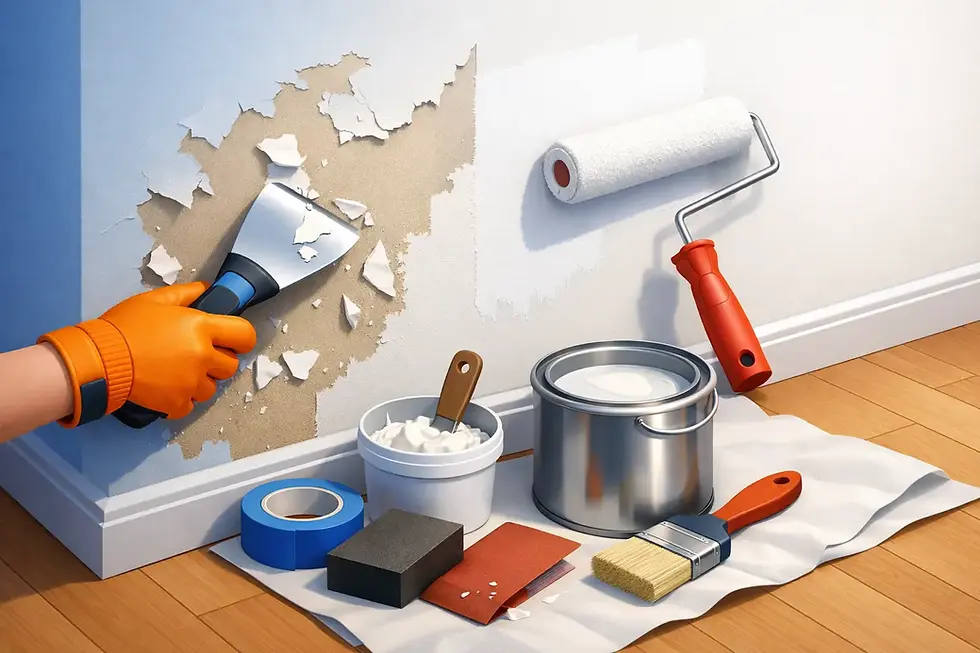
Remove loose or failing material
Any loose paint, flaking patches, lifted plaster, or brittle old filler has to come off. There is no value in painting over an unstable surface.
This part can be straightforward or time-consuming depending on the substrate. Some walls only need a light scrape and sand. Others may require more extensive removal of failed coatings or damaged sections before they are ready for repair. Older homes and previously painted commercial spaces can be more unpredictable, particularly where past paint jobs were rushed or incompatible products were used.
Repair cracks, dents, and surface damage
Once the wall is clean and stable, visible defects can be repaired. Small dents, screw holes, settlement cracks, and chipped sections are usually filled with a suitable patching compound. Larger damage may need more involved repair work, particularly if there is movement in the wall or damage to the plasterboard itself.
This is one of the biggest points of difference between a basic paint job and a professional finish. Filling a hole is one thing. Blending that repair so it disappears under paint is another.
It often takes more than one application to get a repair level and true. The filler needs to dry properly, then be sanded back carefully so it sits flush with the surrounding surface. If that step is rushed, the repair can flash through the topcoat and remain visible even after painting.
Sand for a smooth, even surface
Sanding is where the wall starts to become paint-ready. It smooths patch repairs, feathers out paint edges, dulls glossy surfaces, and helps create a more uniform substrate.
The aim is not always to sand a wall back aggressively. In many cases, it is about controlled surface correction. Over-sanding can damage plasterboard paper or create unnecessary dust, while under-sanding leaves ridges, rough spots, and uneven texture. The right approach depends on the existing finish and what needs to be corrected.
Dust removal matters just as much as the sanding itself. Fine dust left on the wall will affect adhesion and can spoil the finish, so surfaces should be vacuumed, wiped down, or both before moving to primer or paint.
When primer is needed
One of the most common mistakes in wall painting is assuming primer is optional. Sometimes it is. Sometimes it is absolutely necessary.
Fresh plaster, bare plasterboard, patched areas, stained walls, repaired surfaces, and dramatic colour changes often require a primer or sealer undercoat. Without it, the finish coat may absorb unevenly, show patchiness, or struggle to cover properly. On repaired areas in particular, primer helps create a consistent surface so the topcoat dries with a more even appearance.
There is no single primer for every job. Water stains, smoke damage, mould-affected areas, bare set plaster, and glossy painted walls all call for different products. Choosing the wrong one can lead to bleed-through, poor adhesion, or wasted paint.
How to prepare previously painted walls for painting
Previously painted walls are often easier to deal with than new surfaces, but only if the existing coating is in sound condition. If the old paint is well adhered, the wall may only need cleaning, spot repairs, sanding, and spot priming. If it is peeling, chalking, blistering, or reacting to moisture, more extensive preparation is needed.
Glossy finishes deserve special attention. Paint does not grip well to slick surfaces without proper deglossing or sanding. This applies to trim and doors as well, but it also matters on walls in laundries, kitchens, and commercial premises where washable finishes have been used.
Preparation issues that change the job
Not every wall follows the standard process. Some surfaces need a more tailored approach.
Water damage is a good example. A stained ceiling or wall may need more than filling and paint. The source of the problem has to be fixed first, the substrate checked for damage, stains sealed correctly, and the repaired area blended back into the surrounding surface.
Older properties can also present movement cracks, patchy old repairs, or layers of paint with different sheen levels. In those cases, preparation becomes as much about correcting past work as getting ready for new paint.
Commercial spaces bring their own challenges. Fast turnarounds, after-hours work, high-traffic areas, and walls with scuffs, signage marks, and repeated patching all affect the prep stage. The finish still needs to look clean and professional, which means surface preparation cannot be treated as an afterthought.
Why professional preparation pays off
For most property owners, the real question is not just how to prepare walls for painting, but how much time, skill, and patience it takes to do it properly. Preparation is labour-intensive, detail-driven work. It is also where experience shows.
A professional painter knows when a crack is cosmetic and when it points to movement, when a stain needs sealing instead of covering, and when a wall needs a full skim and sand rather than a quick spot patch. That judgement saves time, avoids rework, and leads to a finish that holds up better over time.
At Cre8tive Painting Services, preparation is treated as part of the finish, not a separate extra. That means careful assessment, proper repairs, and the sort of detail that helps paint look better and last longer.
If you are planning to repaint a home, rental, office, shop, or strata property, it pays to look past the colour chart for a moment. The best results usually come from what gets fixed, cleaned, sanded, and sealed before the paint tin is opened.


Comments