
When Should Exterior Paint Be Replaced?
- andrew jones
- 2 days ago
- 6 min read

The Tweed Coast's sun, salt air, humidity and heavy rain can wear down an exterior faster than many property owners expect. If you are asking when should exterior paint be replaced, the answer is usually before visible deterioration turns into a repair issue. Fresh paint does more than improve street appeal - it protects the surfaces beneath it from moisture, UV exposure and everyday weathering.
When Should Exterior Paint Be Replaced?
Most exterior paintwork needs a full repaint every five to 10 years, but that range is only a starting point. A well-prepared, professionally painted brick home in a sheltered position may hold its finish for longer. Timber weatherboards, coastal properties and buildings exposed to direct afternoon sun may need attention closer to the five-year mark.
The right time to repaint depends on the building material, the quality of the previous preparation and paint system, and the conditions the property faces. It also depends on whether the coating is still protecting the surface. Paint can look generally acceptable from the driveway while fine cracking, chalking or failed sealant is already allowing water into vulnerable areas.
For commercial premises, repainting may be required sooner for presentation as well as protection. A faded shopfront, tired fascia or peeling entry area can affect how customers view the business before they walk through the door.
Signs Your Exterior Paint Needs Attention
A paint finish does not need to be completely peeling away to warrant action. Early signs are often easier and more cost-effective to address because the underlying surface may need less repair.
Peeling, flaking or bubbling paint
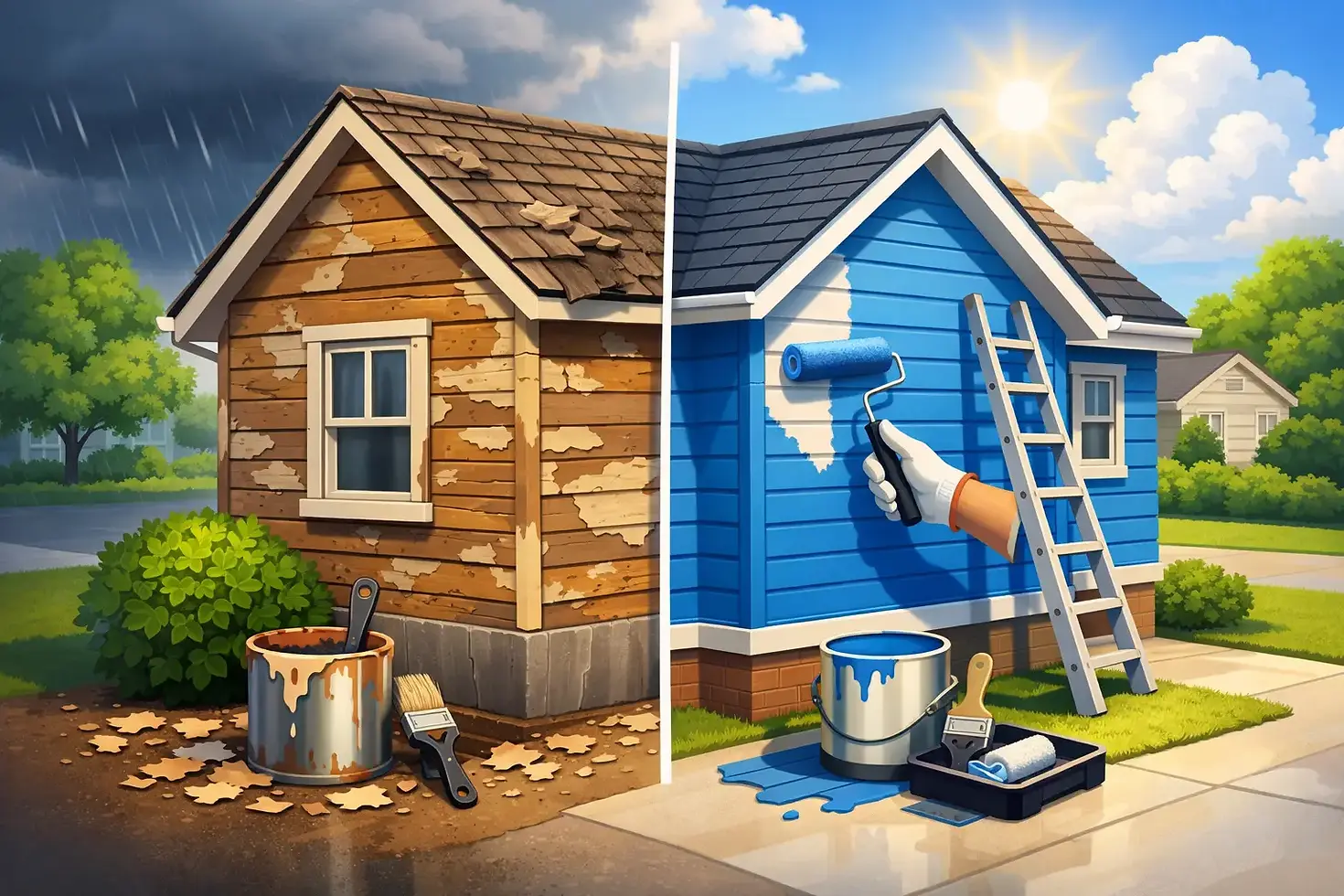
Peeling paint is one of the clearest signs that the coating has failed. It can result from age, moisture behind the paint film, poor adhesion, inadequate preparation or painting over a damp surface. Bubbling may point to trapped moisture or heat-related coating failure.
Once paint is lifting, applying another coat over the top is not a reliable fix. The unstable coating needs to be removed, the cause investigated and the surface properly prepared before repainting. Skipping this work can lead to the new finish failing well before it should.
Cracking and splitting around timber
Timber moves with changes in heat and moisture. Over time, paint can develop fine cracks, wider splits or open joints around weatherboards, trims, windows and doors. These gaps let water reach the timber, increasing the risk of swelling, rot and more extensive repairs.
Early repainting can often preserve the timber with targeted repairs, sanding, priming and sealing. Waiting until boards have deteriorated can turn a painting project into a larger maintenance job.
Chalking, fading and loss of colour
Run your hand across a painted wall. If a powdery residue comes away, the paint may be chalking. This is common on surfaces exposed to strong UV light, particularly darker colours and older coatings. Chalking means the paint binder is breaking down and the coating is gradually losing its ability to protect the surface.
Fading alone does not always mean paint has failed. However, uneven fading, dull patches and a finish that no longer looks clean after washing can indicate that the coating is approaching the end of its service life. On a home or business with strong visual exposure, that may be reason enough to repaint before more obvious damage appears.
Mould, mildew and recurring stains
Humidity and shaded areas create ideal conditions for mould and mildew, particularly on southern walls, eaves, fences and areas close to vegetation. Cleaning may improve the appearance, but stains that return quickly can signal poor drainage, limited airflow or a coating that no longer sheds moisture effectively.
Mould should be treated properly before painting. Recoating over active contamination can compromise adhesion and allow staining to return through the new finish. The underlying moisture source should also be considered, whether it is leaking gutters, blocked drainage or vegetation sitting too close to the building.
Damaged caulking and exposed gaps
Flexible sealants around windows, doors, cladding joints and penetrations do not last forever. When caulking shrinks, cracks or pulls away, rainwater can enter behind painted surfaces. This is especially concerning around timber joinery and external wall penetrations.
A quality exterior repaint should include checking these details, not simply applying paint to the large wall areas. Precision around edges, joints and transitions is what helps a finished job perform over time.
The Surface Matters as Much as the Paint
Different exterior materials show wear in different ways. Render can develop hairline cracks that allow moisture behind the coating. Fibre cement can show faded paint, failed joints or surface damage around fasteners. Metal surfaces may begin to rust where paint has been scratched or where water collects. Timber can split, cup or soften once moisture gets through the coating.
Brick is often lower maintenance, but painted brick still relies on a sound coating system. If paint is blistering, cracking or trapping moisture, it needs assessment rather than another quick coat. The correct preparation and primer depend on the surface, its condition and any previous coatings.
This is why repainting should be treated as a maintenance decision, not only a colour decision. A durable finish begins with surface repairs, cleaning, sanding, filling and priming where needed. The visible topcoat is only one part of the job.
Why Waiting Can Cost More
Delaying repainting can appear economical when the paint is only slightly faded or showing small faults. The trade-off is that exterior paint is a protective barrier. Once it breaks down, sun and water begin working directly on the surface underneath.
On timber, that can mean rot, failed boards and more difficult preparation. On metal, it can mean corrosion spreading beneath the paint. On render, moisture can worsen cracking and contribute to coating failure across a larger area. What may have been a straightforward repaint can become a project involving repairs, replacement materials and additional labour.
There is also the question of property presentation. Homes with a clean, well-maintained exterior tend to feel more cared for, while commercial buildings benefit from a professional finish that supports customer confidence. For landlords and property managers, timely repainting can help maintain the asset between tenancies and reduce the chance of small defects becoming tenant complaints.
Choose the Right Time for Exterior Repainting
Exterior painting needs the right weather window. Paint should not be applied to damp surfaces or when rain is likely before the coating has time to dry and cure. Very hot surfaces can also create application problems, while high humidity may slow drying.
On the Tweed Coast, planning around rain, coastal moisture and seasonal heat is part of delivering a long-lasting result. A professional painter will assess the surface condition and select an appropriate time and coating system for the job rather than rushing to paint over unsuitable conditions.
If your building has storm damage, water staining or insurance-related repairs, the timing may be more urgent. The affected area should be inspected for moisture and substrate damage before any cosmetic work begins. Painting too soon can hide a problem without resolving it.
Repaint, Touch Up or Repair First?
A small scuff, isolated chip or minor mark may only need a touch-up, provided the surrounding paint is sound and the original colour can be matched. Localised repairs can also be suitable where damage is limited, such as one affected window sill or a small section of fascia.
A full repaint is usually the better option when fading is widespread, coatings are chalking across several elevations, or there are multiple areas of cracking and peeling. It provides a consistent appearance and allows the entire exterior to be properly assessed and prepared.
The key is not to judge the job by one wall alone. Inspect the sunny side, shaded side, eaves, trims, doors, window frames and areas near gutters. Wear is rarely even across a property.
A Professional Assessment Protects the Finish
Before repainting, an experienced contractor should look beyond the colour choice. The inspection should identify failed paint, damaged substrates, moisture concerns, cracks, mould, rust and gaps in sealant. From there, the right preparation and coating approach can be planned for the building's materials and exposure.
Cre8tive Painting Services brings more than 20 years of painting experience to residential and commercial properties across the Tweed Coast. Careful preparation, precise repairs and quality finishes help ensure the result looks polished and provides the protection your property needs.
If your exterior is fading, chalking, cracking or showing signs of water damage, do not wait for the paint to fail completely. Addressing it while repairs are still manageable gives your property the best chance of staying protected, presentable and ready for the seasons ahead.


Comments