
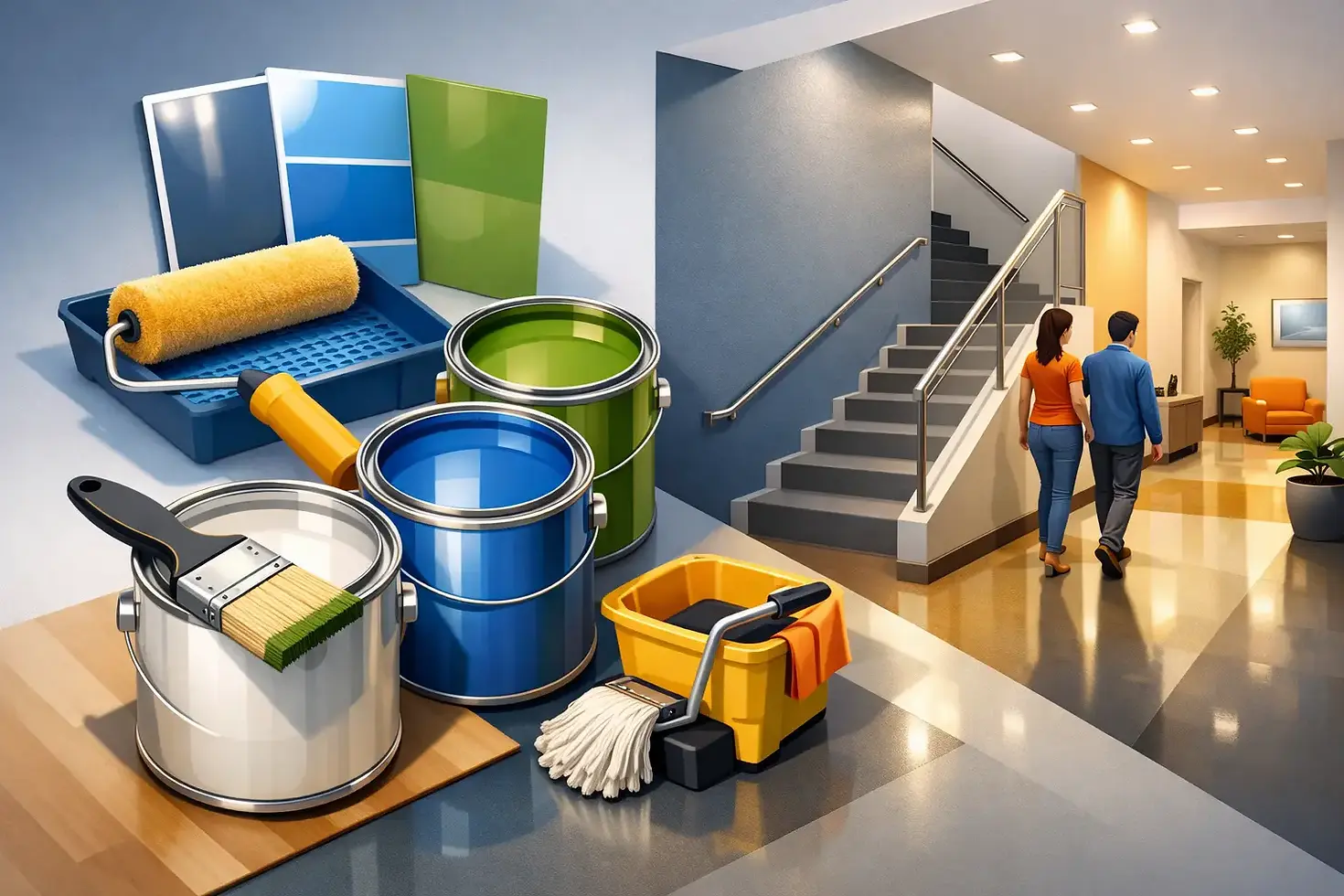
Best Paint Finishes for High Traffic Areas

Scuffed hallway walls, marked skirting boards and fingerprints around door frames tend to show up fast in a busy property. Choosing the best paint finishes for high traffic areas is not just about appearance. It affects how well the surface handles daily wear, how easy it is to clean, and how often you will need to repaint.
In homes, these areas usually include entryways, corridors, kitchens, stairwells, kids' rooms and living spaces that get constant use. In commercial settings, it can mean reception areas, offices, retail floors, shared bathrooms and fit-outs where presentation matters every day. The right finish helps the paintwork stay sharper for longer, but there is no one-size-fits-all answer. The best choice depends on the room, the surface condition and how much contact that area gets.
What makes a paint finish suitable for busy spaces?
High traffic areas need more than a good colour choice. They need a finish that stands up to knocks, resists marking and can be cleaned without dulling or wearing through too quickly. That usually means moving away from very flat finishes in the hardest-working parts of the property.
As a general rule, the more sheen a finish has, the better it will handle washing and regular contact. That said, more sheen also means more reflection, which can highlight surface imperfections if the preparation is not done properly. This is where experience matters. A durable finish only performs as well as the prep work underneath it.
For most properties, the key balance is between durability, washability and how much of the wall or trim condition you want to reveal.
Best paint finishes for high traffic areas in most properties
If you are weighing up the best paint finishes for high traffic areas, there are three finishes that usually do the heavy lifting: low sheen, semi-gloss and gloss. Each has a place, and using the right one on the right surface gives the best long-term result.
Low sheen for walls
Low sheen is often the most practical choice for internal walls in busy parts of the home or workplace. It has enough washability to cope with everyday marks, but it is not as reflective as semi-gloss or gloss. That makes it a strong option for hallways, living areas, stairwells, offices and general circulation spaces.
For many clients, low sheen gives the best balance. It looks clean and modern, handles light scrubbing better than flat paint, and does not draw attention to every minor imperfection in the plaster. In family homes or tenanted properties, that matters.
If the walls are in poor condition, low sheen is usually more forgiving than a shinier finish. If they are well prepared and you want a durable, neat-looking result without too much glare, it is often the safest recommendation.
Semi-gloss for trim, doors and hard-working rooms
Semi-gloss is a step up in durability and washability. It is commonly used on skirting boards, architraves, doors and other trim because those surfaces are touched, kicked or bumped more than walls. It also works well in kitchens, laundries and bathrooms where moisture and regular cleaning are part of the picture.
On timberwork and trim, semi-gloss gives a crisp, professional finish while making cleaning easier. Marks wipe off more readily, and the surface generally holds up better over time. In commercial interiors, it is also useful where presentation needs to stay sharp with minimal maintenance.
The trade-off is that semi-gloss shows more of the substrate. If the surface has dents, uneven repairs or poor sanding, they will stand out more clearly than they would under a lower sheen.
Gloss for maximum durability on selected surfaces
Gloss is the hardest-wearing of the common interior finishes, but it is not always the best visual fit for every area. It is most useful on doors, handrails, skirting boards and feature trim where durability is the priority and a higher shine suits the space.
In some commercial settings, gloss can be a smart choice for heavy-use timber or metal surfaces because it is tough and easy to wipe down. In homes, it is often used more selectively. On large wall areas, gloss can feel too reflective and tends to highlight every surface flaw.
Used properly, though, gloss still has a place. It is especially effective where surfaces cop repeated handling and need a finish that can take it.
Where flat and matte finishes fall short
Flat or matte paints can look excellent in low-use spaces. They soften the look of the wall and hide minor imperfections better than higher-sheen finishes. That is why they are often used in bedrooms or on ceilings.
In busy areas, though, they are usually not the strongest performer. They can mark more easily, and cleaning them can leave burnished spots or visible patchiness. If a corridor, entry or retail area sees regular contact, a flatter finish can start looking tired well before a more washable system would.
That does not mean flat finishes are poor quality. It simply means they are designed for a different purpose.
Choosing the right finish by area
The best finish often changes from one part of the property to another.
Hallways, corridors and entries generally benefit from low sheen on walls and semi-gloss on trim. These are the first areas to cop bags, shoes, hands and daily movement, so durability matters.
Kitchens and laundries usually need finishes that can handle moisture, grease and regular wiping. Low sheen can work well on walls, while semi-gloss is often the better option for doors, frames and trims.
Stairwells are another high-contact zone, particularly around corners, handrails and landings. Low sheen is usually the practical choice for walls, with gloss or semi-gloss reserved for handrails and timber details that need extra protection.
In commercial properties, reception areas, waiting rooms and shop interiors need to stay presentable under heavier use. A durable low sheen on walls paired with semi-gloss or gloss on trim usually gives the right mix of appearance and resilience.
Why preparation matters as much as the finish
A high-quality finish will not hide poor preparation. In fact, the more durable and washable the coating, the more obvious surface defects can become if repairs, sanding and priming are rushed.
This is one of the biggest reasons paint jobs fail early in high traffic areas. The issue is not always the product itself. It can be patchy repairs, poor adhesion, contamination on the surface or the wrong primer under the top coats.
Professional preparation includes filling and sanding damaged areas, addressing peeling or chalky surfaces, sealing repairs properly and applying the correct system for the material underneath. That is what gives the finish its best chance to last.
For homeowners, landlords and business operators, this matters because the cheapest-looking result is often a repaint that starts showing wear too soon.
Durability is not just about sheen
Sheen level matters, but it is only part of the equation. Product quality, surface type, room use and cleaning methods all affect how long the finish holds up.
For example, a premium low sheen applied correctly can outperform a cheaper semi-gloss in real-world conditions. Likewise, a wall in a quiet office and a wall in a family hallway may both have the same finish, but the wear rate will be completely different.
This is why practical recommendations should be based on how the space is actually used. In a busy household with kids and pets, washability becomes a bigger priority. In a commercial setting, durability and presentation may carry equal weight. A good painting contractor will factor in both.
Getting the finish right the first time
If you are repainting a high-use area, it pays to think beyond the sample board. The finish needs to suit the traffic level, the surface condition and the standard of appearance you want to maintain. A finish that looks good on day one but shows every scuff by month three is rarely the right choice.
For most homes and commercial interiors, low sheen on walls and semi-gloss or gloss on trims remains the most dependable combination. It gives a clean, professional look while standing up better to the wear that busy properties deal with every day.
At Cre8tive Painting Services, that is the kind of decision-making we focus on - not just what looks right, but what will keep performing once the job is finished. The best result is a finish that still looks the part after real use, not just straight after handover.


Comments